Research Report
Unveiling the Burden: An Analytical Review of the Epidemiology, Transmission Dynamics, and Control Strategies of Lymphatic Filariasis in West Bengal 
 ,
Anupam Ghosh1 ,
Biplab Mandal1

2 Department of Zoology, Vidyasagar University; Midnapore, West Bengal
Author Correspondence author
Journal of Mosquito Research, 2026, Vol. 16, No. 5
Received: 30 Aug., 2026 Accepted: 10 Oct., 2026 Published: 03 Nov., 2026
Lymphatic filariasis (LF) remains a major neglected tropical disease affecting populations in tropical and subtropical regions, particularly among economically vulnerable communities. The disease is caused by filarial nematodes, including Wuchereria bancrofti, Brugia malayi, and Brugia timori, and is associated with chronic conditions such as lymphoedema, hydrocele, and elephantiasis, which lead to long-term disability, social stigma, and reduced quality of life. Globally, more than 51 million people are estimated to be infected, with India accounting for a substantial proportion of the disease burden. Within India, West Bengal is recognized as an endemic region where several districts continue to report ongoing transmission despite sustained control efforts.
This review synthesizes available literature to examine the epidemiology, transmission dynamics, and control strategies of LF in West Bengal. Particular attention is given to the role of vector ecology, environmental conditions, and socio-economic factors in maintaining transmission. In addition to qualitative synthesis, the review incorporates a quantitative assessment using district-level data to explore the relationship between selected determinants-such as poverty, literacy, and programme coverage-and microfilaria prevalence. The findings indicate that while overall prevalence has declined, residual transmission persists, particularly in areas characterized by socio-economic disadvantage and inadequate environmental management.
The effectiveness of interventions, including mass drug administration (MDA) and integrated vector management (IVM), is influenced by variable compliance, surveillance gaps, and implementation challenges. The persistence of infection despite long-term interventions highlights the need for a more integrated approach that combines biomedical strategies with improvements in sanitation, housing, and community participation. Strengthening surveillance systems and incorporating evidence-based planning are essential for identifying residual hotspots and guiding targeted interventions.
In conclusion, sustainable elimination of Lymphatic filariasis in West Bengal will depend on a coordinated strategy that addresses both the biological and socio-economic determinants of transmission. A multidisciplinary and community-focused approach will be critical for achieving long-term interruption of transmission and contributing to national elimination goals.
1 Introduction
1.1 Definition and classification
Lymphatic filariasis (LF) is a vector-borne parasitic disease caused by filarial nematodes that inhabit the human lymphatic vessels and lymph nodes, leading to lymphatic dysfunction and chronic disability. The World Health Organization (WHO, 2023) classifies LF as a neglected tropical disease (NTD) because it predominantly affects impoverished populations in tropical and subtropical regions and has a substantial socio-economic impact. The disease causes disfigurement, social stigma, and loss of productivity, making it both a medical and a social burden in endemic areas.
1.2 Etiological agents
The etiological agents of LF include three species of filarial parasites: Wuchereria bancrofti, Brugia malayi, and Brugia timori (Centers for Disease Control and Prevention, 2019). Among these, Wuchereria bancrofti is responsible for approximately 90% of global infections, while Brugia malayi and Brugia timori account for the remainder, particularly in Southeast Asia and the Pacific islands. The parasites are transmitted to humans through the bites of infected mosquitoes belonging to the genera Culex, Anopheles, Aedes, and Mansonia, depending on geographical distribution (Taylor et al., 2010). Once inside the human host, the larvae migrate to the lymphatic system, where they mature into adult worms and cause chronic inflammation.
1.3 Pathophysiology and clinical manifestations
The disease progresses through asymptomatic, acute, and chronic stages. Initially, most infected individuals remain asymptomatic but may carry microfilariae in their blood. Over time, repeated infection can cause lymphatic obstruction and damage, resulting in lymphoedema of the limbs, hydrocele (accumulation of fluid in the scrotum), and elephantiasis, which is characterized by severe thickening of the skin and underlying tissues (Taylor et al., 2010). These chronic manifestations cause permanent disability, psychological distress, and social isolation, particularly among low-income populations with limited access to healthcare and adequate sanitation.
1.4 Global burden and elimination targets
Lymphatic filariasis affects more than 51 million people across 72 countries, with approximately 859 million individuals at risk of infection (WHO, 2023). India bears nearly 40% of the global LF burden, making it the most affected country worldwide (Tripathi et al., 2022). To address this burden, WHO launched the Global Programme to Eliminate Lymphatic filariasis (GPELF) in 2000, with the goal of eliminating LF as a public health problem by interrupting transmission through mass drug administration (MDA) and managing morbidity among affected individuals. Despite significant progress, persistent transmission in certain endemic pockets continues to hinder elimination.
1.5 Rationale for focusing on West Bengal
West Bengal is one of India's most LF-endemic states because of its dense population, varied topography, high humidity, and inadequate sanitation, all of which favour mosquito breeding and disease transmission (National Centre for Vector Borne Diseases Control, 2024). Districts such as Murshidabad, Malda, and South 24 Parganas have reported persistent transmission despite multiple rounds of MDA. Furthermore, socio-economic vulnerability, urban-rural disparities, and behavioural factors continue to hinder elimination efforts. Therefore, an analytical review of LF in West Bengal provides valuable insights into the challenges of disease control and gaps in existing intervention programmes.
2 Methodology of Review
This review was designed to compile and interpret existing knowledge on Lymphatic filariasis in West Bengal through a structured yet flexible approach. Relevant information was gathered from multiple scientific databases. In addition to research articles, official publications and reports from the Government of India, the National Vector Borne Disease Control Programme (NVBDCP), and the World Health Organization (WHO) were consulted to obtain reliable epidemiological and programme-related data.
The literature considered for this review primarily spans the period from 2000 to 2025, allowing inclusion of both earlier observations and recent developments in disease control and surveillance.
Studies were selected according to their relevance to the objectives of the review. Preference was given to studies addressing epidemiological trends, transmission patterns, vector dynamics, control measures, and social or environmental determinants, particularly in India and, where available, West Bengal. Both original research articles and review papers were considered.
The selected literature was then examined and organized into thematic sections to identify patterns, regional variations, and gaps in knowledge. This approach allowed a more integrated understanding of the factors influencing the persistence and control of Lymphatic filariasis in West Bengal.
In addition to qualitative synthesis, a quantitative analytical component was incorporated using district-level secondary data. Variables including microfilaria prevalence, poverty rate, MDA compliance, and literacy rate were analyzed to assess their relationships. Pearson correlation analysis was used to determine the strength and direction of associations, and linear regression was applied to estimate the extent to which selected determinants explain variation in prevalence across districts.
3 Epidemiology of Lymphatic filariasis in West Bengal
3.1 Historical overview
Lymphatic filariasis (LF) has long been recognized as a public health problem in India. In mainland India, Wuchereria bancrofti, transmitted principally by Culex quinquefasciatus, accounts for most LF infections, with transmission occurring in both urban and rural settings. West Bengal was among the endemic states included in India’s early mass drug administration (MDA) initiatives during 1996-1997 (Agrawal and Sashindran, 2006).
Organized national control efforts began with the launch of the National Filaria Control Programme (NFCP) in 1955, following a pilot project conducted in Odisha between 1949 and 1954. The programme sought to delineate endemic areas, implement control measures and train personnel. Early interventions included diethylcarbamazine (DEC) administration and mosquito control. However, programme assessments identified difficulties with community cooperation and insecticide resistance, prompting changes in control strategies, including greater reliance on anti-larval measures in urban areas (Agrawal and Sashindran, 2006).
International commitment to LF elimination strengthened when the World Health Assembly adopted Resolution WHA50.29 in 1997. Subsequently, the World Health Organization launched the Global Programme to Eliminate Lymphatic filariasis (GPELF) in 2000, emphasizing interruption of transmission and alleviation of disease-related morbidity (World Health Organization, n.d.). India launched its national LF elimination programme in 2004, initially using DEC alone for MDA and subsequently introducing DEC combined with albendazole (Tripathi et al., 2022). In West Bengal, evaluation of MDA in Bankura district documented continuing challenges in drug consumption and community awareness, highlighting the importance of effective delivery and participation in elimination efforts (Ghosh et al., 2013).
3.2 Current epidemiological situation
3.2.1 District-wise prevalence
West Bengal has a documented history of LF endemicity, although recent programme reports indicate substantial progress towards interruption of transmission. An official update dated 6 August 2024 reported that 12 districts in West Bengal had cleared the first Transmission Assessment Survey (TAS-I), 10 had cleared TAS-II and eight had cleared TAS-III (Ministry of Health and Family Welfare, 2024). These figures describe programme assessment status rather than district-specific prevalence and should not be interpreted as confirmation that all infections or chronic manifestations have disappeared.
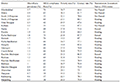
Published community surveys provide additional evidence of the remaining morbidity burden. A survey conducted during 2019-2020 in Gourbazar gram panchayat, Paschim Burdwan district, identified clinical manifestations consistent with LF in 115 of 11 661 residents, corresponding to a morbidity prevalence of 0.97% (Saha et al., 2025b). This estimate applies to the surveyed community; it is neither a district-wide estimate nor a measure of microfilarial prevalence. Comparisons between districts therefore require clearly identified survey years, populations and diagnostic methods. District-level variables used in the quantitative analysis are presented in Table 1.
|
Table 1 District wise distribution of Microfilaria Prevalence, MDA Compliance Rate, Poverty rate, Literacy rate and Transmission Assessment Survey (TAS) Status Source: Compiled and synthesized from National Vector Borne Disease Control Programme (NVBDCP) Annual Reports (2022-2023), Census of India (2011), and published epidemiological studies |
3.2.2 Distribution by gender, age, and occupation
Available community evidence does not establish a uniform male predominance in LF across West Bengal. In the Gourbazar survey, clinical morbidity prevalence was 0.95% among males and 1.02% among females. The mean age of affected individuals was approximately 50 years (Saha et al., 2025b). These findings concern established morbidity and should not be equated with the age or sex distribution of active infection.
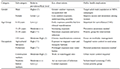
Children also require attention because filarial infection can precede recognizable clinical disease. National guidelines include testing of young children in transmission assessment surveys and recognize the occurrence of subclinical lymphatic damage in infected individuals (National Centre for Vector Borne Diseases Control, 2024). However, the sources verified for this section do not establish a statewide ranking of infection risk among agricultural labourers, fishers and construction workers. The demographic and occupational categories discussed in this review are summarized in Table 2.
|
Table 2 Gender-, Age-, and occupation-wise distribution of Lymphatic filariasis in West Bengal Source: Compiled and synthesized from Rao and Bandyopadhyay (2022), and related epidemiological studies from eastern India |
3.2.3 Endemic zones and high-risk populations
Assessment of residual LF risk requires attention to local infection indicators and vector breeding habitats. Culex quinquefasciatus, the principal vector of bancroftian filariasis in India, commonly breeds in organically polluted stagnant water, including blocked drains, open sewers, septic tanks and ditches. Inadequate drainage and sanitation can therefore create conditions favourable to vector proliferation (NCVBDC, 2024).
These environmental conditions justify targeted entomological surveillance and improvements in drainage and waste management. Nevertheless, vector abundance alone does not demonstrate ongoing LF transmission. Identification of local transmission foci requires parasitological or antigen-based assessment alongside vector surveillance (NCVBDC, 2024).
3.2.4 Socio-economic and environmental determinants
Community studies highlight socioeconomic disadvantage among people living with LF-related morbidity. In the Gourbazar survey, 56.5% of affected individuals were illiterate, and more than half belonged to socioeconomic class IV under the modified B. G. Prasad classification (Saha et al., 2025b). These descriptive findings indicate important needs for accessible information and care, although they do not independently establish that poverty or low literacy caused infection.
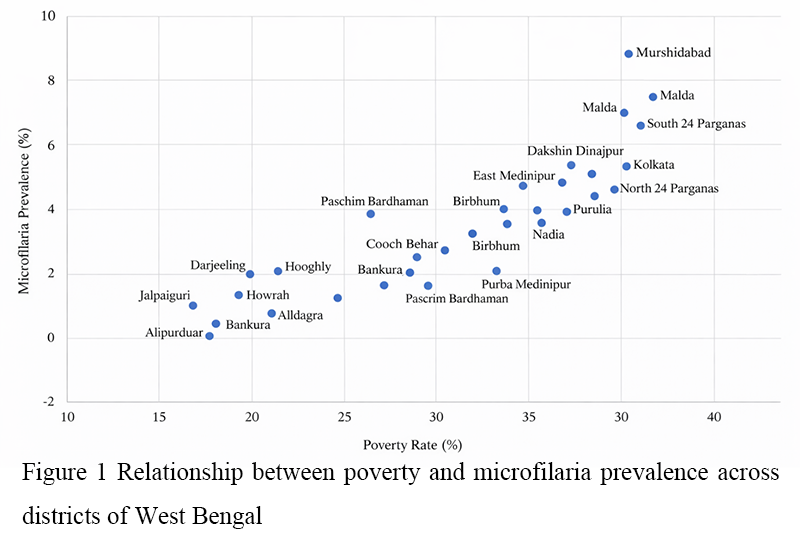
Participation in elimination activities also depends on effective communication and drug delivery. An evaluation following the 2012 MDA round in Bankura identified fear of adverse effects, absence during distribution and lack of counselling as reasons for non-consumption of medicines (Ghosh et al., 2013). Addressing these barriers, together with environmental management and continued surveillance, remains relevant to sustaining elimination gains (NCVBDC, 2024). Figure 1 presents the plotted relationship between poverty rate and microfilaria prevalence across districts.
|
Figure 1 Relationship between poverty and microfilaria prevalence across districts of West Bengal |
3.3 Statistical analysis of factors influencing microfilaria prevalence
3.3.1 Association between poverty and microfilaria prevalence
Pearson correlation analysis revealed a moderate positive correlation between poverty rate and microfilaria prevalence (r = 0.497). The association was statistically significant (p = 0.016), indicating that the observed relationship was unlikely to have occurred by chance.
3.3.2 Association between MDA compliance and microfilaria prevalence
The relationship between Mass Drug Administration (MDA) compliance and microfilaria prevalence showed a very weak positive correlation (r = 0.135, p = 0.539), which was not statistically significant (p > 0.05). The regression model explained only 1.8% of the variation in prevalence (R² = 0.018), indicating negligible explanatory power.
This suggests that variation in reported MDA compliance alone does not significantly explain differences in prevalence across districts, possibly due to inconsistencies between coverage and actual drug consumption, as well as the influence of other ecological and socio-economic factors.
3.3.3 Association between literacy rate and microfilaria prevalence
Literacy rate showed a weak negative correlation with microfilaria prevalence (r = -0.313, p = 0.145), but the association was not statistically significant (p > 0.05). Regression analysis indicated that literacy explained approximately 9.8% of the variation in prevalence (R² = 0.098).
Although the negative trend suggests that higher literacy may contribute to reduced prevalence through improved awareness and health-seeking behaviour, the lack of statistical significance indicates that literacy alone is not a strong determinant of disease distribution.
A comparative statistical analysis of key determinants indicated that poverty was the only variable significantly associated with microfilaria prevalence across the districts of West Bengal. In contrast, MDA compliance and literacy rate showed weak, non-significant relationships. These findings suggest that the persistence of Lymphatic filariasis is strongly associated with underlying socio-economic conditions, whereas programme-related and behavioural factors alone are insufficient to explain spatial variation in disease prevalence. The results further highlight the multifactorial nature of transmission, in which environmental conditions, vector ecology, intervention effectiveness, and socio-economic vulnerability interact.
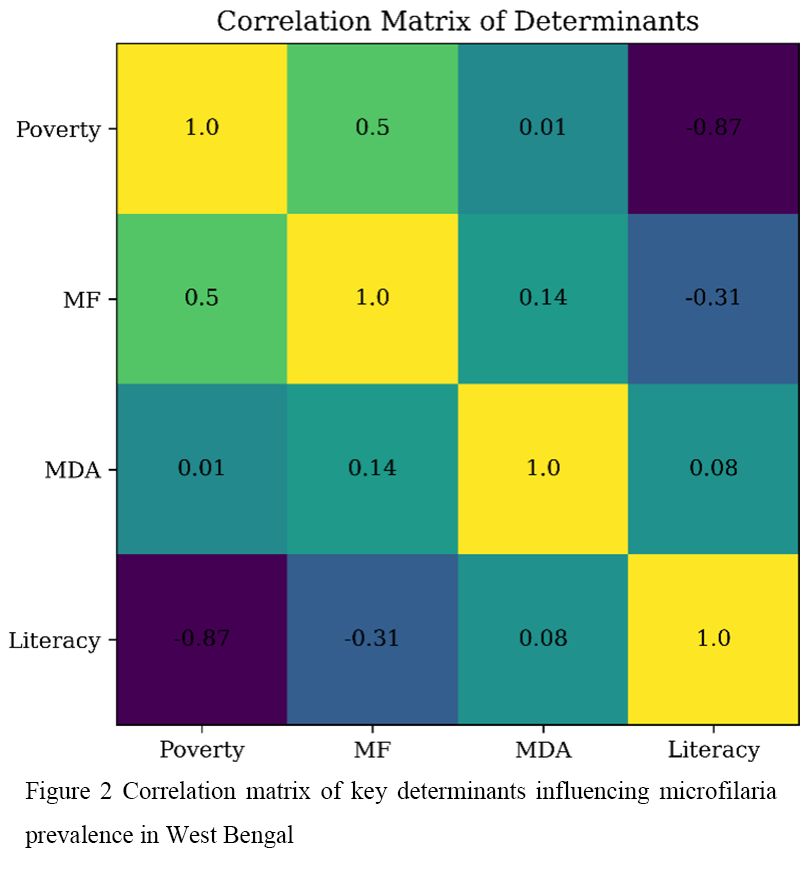
To examine the combined influence of multiple determinants, a correlation matrix analysis was performed (Figure 2). The analysis revealed that poverty exhibited a moderate positive correlation with microfilaria prevalence (r = 0.50), whereas MDA compliance showed a very weak association (r = 0.14), and literacy demonstrated a weak negative relationship (r = -0.31). Additionally, a strong inverse relationship was observed between poverty and literacy (r = -0.87), indicating underlying socio-economic interdependence.
|
Figure 2 Correlation matrix of key determinants influencing microfilaria prevalence in West Bengal |
These findings suggest that while poverty plays a significant role, other factors such as programme effectiveness and educational status contribute variably to disease distribution. The lack of strong correlations for individual variables further supports the multifactorial nature of Lymphatic filariasis transmission in West Bengal.

Furthermore, linear regression analysis demonstrated that poverty rate explained approximately 24.7% of the variation in microfilaria prevalence across districts (R² = 0.247). Although this indicates a meaningful association, the moderate R² value suggests that other factors, such as sanitation, vector ecology, and the effectiveness of control programmes, also play important roles in shaping the spatial distribution of Lymphatic filariasis.
Overall, the findings support the view that poverty is an important underlying determinant of disease persistence in West Bengal, while also highlighting the multifactorial nature of Lymphatic filariasis transmission.
3.4 Disease burden analysis
3.4.1 Disability-adjusted life years (DALYs) and economic impact
Lymphatic filariasis (LF) imposes a substantial burden through chronic morbidity and disability. An analysis of the Global Burden of Disease Study 2021 estimated that LF accounted for approximately 1.31 million disability-adjusted life years (DALYs) globally in 2021 (95% uncertainty interval: 0.769-2.22 million) (Zhao et al., 2025).
The economic consequences include healthcare expenditure and reduced income-earning opportunities. An analysis of nationally representative Indian survey data collected in 2014 documented out-of-pocket expenditure associated with LF-related hospitalization and outpatient care, demonstrating the financial burden borne by affected households (Tripathy and Prasad, 2020). These national findings provide relevant context, although they do not establish the proportion of annual household income spent on LF in West Bengal.
3.4.2 Quality of life and social Stigma
Chronic manifestations of LF, including lymphoedema, elephantiasis and hydrocele, can cause pain, disability, social stigma and adverse effects on mental well-being. These consequences may also restrict earning opportunities and increase medical expenses for patients and caregivers (World Health Organization, 2024).
Direct evidence from West Bengal is provided by a community-based study conducted during 2019-2020 in Gourbazar gram panchayat, Paschim Burdwan district. The study identified 115 patients with LF and assessed quality of life using the Lymphatic filariasis Specific Quality of Life Questionnaire. Activity and mobility were the most affected domains, whereas social and psychological domain scores were comparatively favourable. Women had a lower median overall quality-of-life score than men; however, this descriptive difference should not be interpreted as evidence of greater stigma among women (Saha et al., 2023). These findings represent one study community and should not be generalized to all patients in West Bengal.
3.4.3 Long-term implications
The long-term consequences of LF require sustained care alongside interventions to interrupt transmission. WHO identifies morbidity management and disability prevention as essential components of LF elimination, including lymphoedema care, management of acute inflammatory episodes and access to hydrocele surgery (WHO, 2024). In the West Bengal study, only 26.1% of identified patients correctly knew how to manage the affected area, highlighting a local need for patient education and self-care support (Saha et al., 2023). For West Bengal, these findings support strengthening accessible morbidity services and incorporating rehabilitation and psychosocial support into patient care.
4 Transmission Dynamics
4.1 Vector biology
Culex quinquefasciatus is the principal mosquito vector of bancroftian lymphatic filariasis in mainland India and an established vector of Wuchereria bancrofti in West Bengal. It feeds predominantly at night and commonly breeds in polluted stagnant water, including blocked drains, septic tanks, open sewers and wastewater collections (National Centre for Vector Borne Diseases Control, 2024). Its nocturnal feeding behaviour corresponds with the nocturnal periodicity of W. bancrofti microfilariae in peripheral blood (Centers for Disease Control and Prevention, 2019).
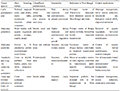
Entomological studies demonstrate geographical variation in its abundance and seasonal activity within West Bengal. In ten villages of coastal Digha, Cx. quinquefasciatus accounted for 88.44% of collected mosquitoes, was more abundant around human habitations than cattle sheds, and showed its highest adult density during the rainy season (Azmi et al., 2015). In contrast, a study around the foothills of Susunia reported higher vector indices during summer (Paramanik and Chandra, 2010). These findings indicate that surveillance and control should follow locally observed seasonal patterns rather than assume a uniform monsoon peak throughout the state. The mosquito species and their ecological characteristics are summarized in Table 3.
|
Table 3 Ecological characteristics and epidemiological relevance of major mosquito vectors of Lymphatic filariasis in West Bengal Source: Compiled and synthesized from World Health Organization (2022, 2023), National Vector Borne Disease Control Programme (Government of India, 2022; 2023), Chatterjee et al. (2019), Dinesh et al. (2019), and Mitra et al. (2021) |
4.2 Parasite life cycle
The life cycle of Wuchereria bancrofti involves humans as definitive hosts and mosquitoes as intermediate hosts and vectors. During feeding, an infective mosquito deposits third-stage larvae (L3) onto the skin. The larvae enter through the bite wound and develop into adult worms in the lymphatic system. Adult females produce microfilariae that circulate in the blood; the nocturnal periodicity of the parasite in India facilitates uptake by night-biting mosquitoes (CDC, 2019). Adult worms can survive for approximately 6-8 years (World Health Organization, 2024). When a mosquito ingests microfilariae during a blood meal, they lose their sheaths, penetrate the gut wall and migrate to the thoracic muscles. They develop through larval stages into infective L3 larvae, which subsequently migrate to the proboscis and can enter another person during a later blood meal (CDC, 2019). Completion of this development requires the mosquito to survive until it becomes infective. Mosquito abundance alone therefore does not demonstrate ongoing transmission; surveillance must also assess evidence of infection and infectivity in vectors.
4.3 Environmental and climatic factors
Environmental conditions influence LF transmission potential by determining the availability of mosquito breeding habitats. Blocked drainage and persistent collections of polluted water provide suitable habitats for Cx. quinquefasciatus. Improving drainage and reducing stagnant wastewater are consequently relevant components of vector management (NCVBDC, 2024).
Seasonal conditions are also associated with variation in vector abundance and transmission-related indices. However, findings from Digha and Susunia demonstrate that the seasonal pattern is not uniform across West Bengal (Paramanik and Chandra, 2010; Azmi et al., 2015). Local assessments should therefore examine mosquito density, breeding habitats and vector infection indicators alongside meteorological observations. Neither increased mosquito abundance nor a particular temperature-humidity combination should be treated as direct evidence of increased human LF transmission without supporting measurements.
4.4 Human behavioural and social determinants
Exposure to mosquito bites and participation in preventive treatment influence LF transmission. Avoidance of mosquito bites can complement elimination activities, while the effectiveness of MDA depends on eligible individuals actually consuming the prescribed medicines. Drug distribution figures should therefore be distinguished from treatment consumption (WHO, 2024).
Evidence from Bankura illustrates the importance of programme delivery and communication. Following the 2012 MDA round, Ghosh et al. (2013) identified fear of side effects, absence from home during distribution and lack of counselling as reasons for non-consumption. These findings support clear explanations of treatment benefits and possible adverse effects, effective household follow-up, and arrangements to reach people missed during distribution. They represent findings from a particular district and treatment round rather than evidence of uniformly poor compliance across West Bengal.
5 Control and Elimination Strategies
5.1 National and state-level programmes
India’s organized efforts against Lymphatic filariasis (LF) began with the National Filaria Control Programme in 1955. Its initial approach combined identification and treatment of microfilaria carriers with vector control, but implementation was concentrated in selected urban areas, leaving much of the rural endemic population outside programme coverage (National Centre for Vector Borne Diseases Control, 2024).
The National Programme to Eliminate Lymphatic filariasis was launched in 2004. Subsequently, India introduced triple-drug administration with ivermectin, diethylcarbamazine and albendazole (IDA) in selected districts in 2018 to accelerate elimination (Tripathi et al., 2022). Treatment therefore includes the two-drug diethylcarbamazine-albendazole (DA) regimen and the IDA regimen, according to applicable programme criteria. Elimination combines interruption of transmission through mass drug administration (MDA) with morbidity management and disability prevention for affected individuals (World Health Organization, 2024).
Evidence from West Bengal highlights the importance of actual drug consumption. A study following Bankura’s 2012 MDA round identified fear of side effects, absence during distribution and inadequate counselling as reasons for non-consumption (Ghosh et al., 2013). These findings support locally tailored communication and follow-up, rather than an assumption of uniformly low participation throughout the state.
5.2 Vector control measures
Vector control complements MDA by reducing opportunities for mosquito-mediated transmission. For Culex quinquefasciatus, environmental management should address blocked drains and stagnant polluted water. Appropriate larval control can be selected according to habitat characteristics and surveillance findings (NCVBDC, 2024).
WHO recognizes mosquito control and personal protection as supplementary measures. The suitability of insecticide-treated nets and other interventions depends on the local vector species and its behaviour; evidence of benefit in Anopheles-transmitted settings should not automatically be extrapolated to Culex-transmitted LF in West Bengal (WHO, 2024). Consequently, the state’s vector-control activities should be described using documented local implementation records, rather than assuming widespread use of a particular intervention.
5.3 Surveillance and monitoring
Surveillance informs decisions about continuing or stopping MDA and provides follow-up after treatment cessation. Under India’s 2024 guidance, standard Transmission Assessment Surveys (TAS) following DA assess children aged 6-7 years, whereas IDA impact assessments target adults aged 20 years and above and incorporate microfilaria assessment. These approaches should not be described as interchangeable (NCVBDC, 2024).
A successful assessment supports transition to post-MDA surveillance; it does not demonstrate the absence of every infection. Statements about West Bengal’s progress should therefore identify the evaluation unit, survey type, year and result. Treatment monitoring should also distinguish medicines distributed from medicines consumed, using coverage evaluation to assess programme performance (NCVBDC, 2024; Chakraborty and Bhattacharya, 2022).
5.4 Challenges in implementation
A central implementation challenge is ensuring that eligible individuals consume the medicines offered during MDA. Bankura research documents barriers involving perceived adverse effects, missed household visits and insufficient counselling (Ghosh et al., 2013). A subsequent community-based study evaluated the February 2021 MDA round during the COVID-19 pandemic and examined coverage and compliance, providing local evidence relevant to programme assessment (Chakraborty and Bhattacharya, 2022). However, this study should not be used to infer statewide delays or reductions in surveillance without additional programme records.
Strengthening elimination activities requires reliable treatment delivery, clear communication and continued assessment of drug consumption. At the same time, patients with chronic manifestations need access to lymphoedema care, management of acute inflammatory episodes and hydrocele surgery. Maintaining these services alongside transmission-control activities is essential to address both infection and continuing disability (Tripathi et al., 2022; WHO, 2024).
6 Socio-Economic and Environmental Determinants Influencing Transmission
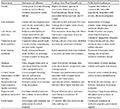
Socio-economic circumstances, environmental conditions and participation in elimination activities are relevant to understanding Lymphatic filariasis (LF). However, associations documented in individual communities should not be generalized to all districts of West Bengal. Table 4 summarizes verified evidence and distinguishes findings about transmission, programme participation and disease consequences.
|
Table 4 Socio-economic and environmental determinants influencing the persistence of Lymphatic filariasis in West Bengal Source: Compiled and synthesized from World Health Organization (2023), Government of India (2023), Rao and Bandyopadhyay (2022), Sahu et al. (2021), Roy and Dutta (2020), and Mitra et al. (2021). |
6.1 Poverty and household economic burden
LF can reinforce economic hardship through healthcare expenditure and loss of income-earning opportunities. An analysis of nationally representative Indian survey data collected in 2014 documented out-of-pocket expenditure associated with LF-related hospitalization and outpatient care (Tripathy and Prasad, 2020). WHO also recognizes the financial consequences of chronic disease for patients and caregivers (WHO, 2024).
These findings establish an economic burden but do not demonstrate that poverty independently determines LF prevalence across West Bengal districts. Such an assessment requires verified, geographically comparable infection and socio-economic data. Poverty should therefore be discussed as a context of vulnerability and a potential consequence of illness, rather than as a proven district-level determinant in the present review.
6.2 Sanitation, literacy and disease awareness
Sanitation and drainage are relevant because Culex quinquefasciatus commonly breeds in polluted water collections. Environmental management should address blocked drains and persistent wastewater accumulation (NCVBDC, 2024). However, the presence of suitable breeding habitats alone does not quantify human infection risk.
Disease awareness and confidence in treatment also influence programme participation. Following Bankura’s 2012 MDA round, fear of side effects, absence during distribution and inadequate counselling were reported as reasons for non-consumption (Ghosh et al., 2013). These findings support clearer communication and follow-up. They should not be interpreted as evidence that literacy independently predicts treatment acceptance or LF prevalence throughout West Bengal.
6.3 Social stigma and psychosocial impact
Visible chronic manifestations of LF can be associated with stigma and adverse effects on mental well-being (WHO, 2024). Nevertheless, the extent of these consequences varies between patients and communities. A study conducted in Gourbazar gram panchayat, Paschim Burdwan, found that activity and mobility were the most affected quality-of-life domains, while social and psychological scores were comparatively favourable (Saha et al., 2023). This local evidence supports assessment of rehabilitation and psychosocial needs without assuming widespread social exclusion or stigma-related treatment delay across the state.
6.4 Housing and drainage infrastructure
Housing protection and drainage management are relevant considerations in reducing contact with mosquitoes. WHO recognizes personal protection and mosquito control as supplementary measures, while national guidance recommends environmental management of breeding habitats (WHO, 2024; NCVBDC, 2024).
For West Bengal, claims that particular building materials, outdoor sleeping or covered drainage independently alter LF risk require direct comparative evidence. Recommendations should therefore emphasize maintained drainage and locally appropriate protection, rather than attribute increased infection to specific housing types without supporting data.
6.5 Integrated intervention approach
LF elimination requires transmission-control activities alongside care for people with chronic manifestations. WHO’s strategy combines MDA with morbidity management and disability prevention, including lymphoedema care and hydrocele surgery (WHO, 2024).
In West Bengal, coordination among health services, local authorities and communities could support environmental management, treatment participation and continuing patient care. Links with sanitation and social-support programmes should be presented as proposed opportunities unless their implementation and outcomes have been evaluated. Local findings on counselling barriers and self-care knowledge provide practical priorities for such coordination (Ghosh et al., 2013; Saha et al., 2023).
6.6 Vector resistance to commonly used insecticides
Insecticide susceptibility varies among Cx. quinquefasciatus populations and should inform chemical control decisions. A study of larval populations from five districts of northern West Bengal reported high resistance to cyphenothrin in most tested populations and resistance to temephos in one population. All tested populations were susceptible to pyrethrum extract, whereas four showed moderate resistance to azadirachtin (Saha et al., 2025a).
These results support susceptibility monitoring but require careful interpretation. Larval laboratory bioassays do not directly establish the effectiveness of adult mosquito control or demonstrate that resistance is sustaining human LF transmission. The findings also should not be generalized to every district or insecticide. Control planning should combine locally relevant susceptibility information with environmental management and assessment of intervention performance.
7 Innovations and Future Prospects
7.1 Advances in molecular diagnosis
Molecular methods offer additional approaches for detecting filarial infection in humans and mosquitoes. Takagi et al. (2011) developed a loop-mediated isothermal amplification (LAMP) assay for Wuchereria bancrofti DNA and demonstrated analytical sensitivity comparable to the PCR assay used in their study. This supports its potential diagnostic and surveillance applications, although laboratory performance should not be interpreted as evidence of routine field deployment in West Bengal.
Molecular xenomonitoring involves testing mosquitoes for parasite DNA. In Sri Lanka, this approach identified persistent W. bancrofti infection after MDA and helped characterize its spatial distribution (Rao et al., 2016). It can therefore complement human infection surveys, but DNA detection alone does not establish that mosquitoes contain infective third-stage larvae.
Rapid filarial antigen testing remains an established programme tool for bancroftian LF assessment. Its role should be distinguished from molecular testing and from antibody-based tests used for brugian filariasis (National Centre for Vector Borne Diseases Control, 2024). For West Bengal, evaluating molecular xenomonitoring alongside existing surveillance is a reasonable research priority, rather than an intervention whose programme effectiveness has already been established.
7.2 Development of antifilarial drugs and vaccines
The search for treatments with sustained activity against adult filarial worms remains relevant to elimination research. A randomized placebo-controlled trial demonstrated macrofilaricidal activity following an eight-week course of doxycycline in people infected with W. bancrofti. Its action targets the parasite’s Wolbachia endosymbionts (Taylor et al., 2005). However, this prolonged treatment course differs substantially from annual single-dose MDA and should not be presented as a directly interchangeable programme regimen.
Drug development must also address safety and practical delivery. Although flubendazole has been investigated for antifilarial activity, development of an orally bioavailable formulation for onchocerciasis was discontinued in 2017 following safety concerns from animal studies (Janssen Pharmaceuticals, 2017). Its experimental potential should therefore not be equated with readiness for LF programme use.
Vaccine research provides another prospective approach. Chauhan et al. (2017) reported improved protection using experimental recombinant vaccine formulations against Brugia malayi in a mouse model. These findings support further investigation but do not establish protective efficacy or safety in humans. Translation into programme use requires clinical evaluation and evidence of durable protection.
7.3 GIS-based surveillance and digital tools
Spatial analysis can help organize surveillance findings and identify areas requiring further investigation. The Sri Lankan molecular xenomonitoring study illustrates how geographically structured mosquito sampling can characterize persistent infection following MDA (Rao et al., 2016). This provides a relevant example for research planning, although its findings should not be attributed to West Bengal.
India’s revised elimination guidance includes digital reporting through LF modules on the Integrated Health Information Platform, covering patient line lists, MDA coverage and surveillance information (NCVBDC, 2024). For West Bengal, combining verified infection data, treatment-consumption records and entomological observations with geographic information systems could support more targeted surveillance. This should be presented as a proposed application unless a specific local implementation study is cited.
7.4 Community-based participatory approaches
Community engagement is important for reaching eligible populations, addressing treatment concerns and supporting continuing patient care. Evidence from Bankura identifies fear of side effects, absence during distribution and inadequate counselling as barriers to MDA consumption (Ghosh et al., 2013). These findings support involving communities in planning communication and follow-up activities.
National guidance recommends engagement with local leaders, women’s groups, schools and frontline workers in communication and mobilization activities (NCVBDC, 2024). In West Bengal, participatory approaches could build on these structures to identify missed households, improve explanations of treatment and strengthen access to morbidity services. Their effectiveness should be evaluated through treatment-consumption and patient-care outcomes rather than assumed from participation alone.
8 Critical Gaps and Recommendations
8.1 Gaps in epidemiological data and research
A priority for assessing LF elimination in West Bengal is the availability of geographically detailed and comparable surveillance information. Records should identify the survey location, year, population examined, diagnostic method and treatment history. Clinical morbidity, microfilaraemia and antigen positivity should be reported separately because they measure different aspects of disease and infection.
Diagnostic limitations also require attention. Asymptomatic infection should not be equated with absence of detectable infection. Microscopy depends on finding microfilariae in appropriately collected blood samples, while antigen testing provides another means of identifying Wuchereria bancrofti infection (Centers for Disease Control and Prevention, 2019). A negative blood smear should therefore be interpreted in relation to sampling conditions and the diagnostic question.
Repeated assessments after MDA cessation are important for evaluating sustained progress. Molecular xenomonitoring may complement human surveys: evidence from Sri Lanka demonstrates its value in identifying persistent infection following MDA, although this does not establish its effectiveness in West Bengal (Rao et al., 2016). Future local studies should evaluate its additional value alongside established surveillance methods.
8.2 Strengthening MDA and vector surveillance
MDA monitoring should distinguish drug distribution from actual consumption. Research following Bankura’s 2012 treatment round identified fear of side effects, absence during distribution and insufficient counselling as reasons for non-consumption (Ghosh et al., 2013). These findings support locally tailored communication, follow-up of missed households and assessment of treatment acceptance.
Microplanning, directly observed consumption and coverage evaluation should follow national guidance. Introduction or expansion of ivermectin-diethylcarbamazine-albendazole (IDA) should likewise follow applicable programme criteria and the corresponding assessment procedures (National Centre for Vector Borne Diseases Control, 2024). Persistent infection alone should not be treated as sufficient justification for changing regimens without programme review.
Entomological investigations should combine mosquito identification and abundance measurements with breeding-habitat assessment and, where feasible, infection testing. Molecular detection can supplement surveillance, but parasite DNA in a mosquito does not by itself demonstrate infective larvae (Rao et al., 2016). Locally relevant insecticide-susceptibility testing is also warranted because northern West Bengal studies demonstrate variation among mosquito populations and compounds (Saha et al., 2025a).
8.3 Need for intersectoral collaboration
Intersectoral coordination can support treatment delivery, environmental management and continuing patient care. National guidance incorporates coordination mechanisms and recommends addressing mosquito breeding habitats through drainage improvement and management of stagnant polluted water (NCVBDC, 2024).
For West Bengal, health services, local government, educational institutions and community organizations could jointly plan communication, habitat management and access to morbidity services. Responsibilities and measurable outcomes should be specified so that collaboration can be evaluated.
Social support should accompany clinical care where needed. WHO recognizes the mental, social and financial consequences of chronic LF and recommends continuing morbidity management and disability prevention (World Health Organization, 2024). Linking these services with rehabilitation and psychosocial support could help address patient needs beyond infection control.
8.4 Future research priorities
Future research in West Bengal should prioritize repeated community assessments that distinguish active infection from chronic morbidity and relate findings to documented treatment histories. Studies combining infection measures, mosquito observations and socio-economic information should account for potential confounding rather than infer causation from simple correlations. Operational priorities include evaluating interventions to improve drug consumption, identifying households repeatedly missed during MDA, and assessing access to self-care education and morbidity services. Research on stigma should measure its extent and consequences directly rather than assume a uniform experience among affected patients.
Entomological priorities include local seasonal patterns, mosquito infection indicators and insecticide susceptibility. Persistent infection after treatment warrants investigation of consumption, reinfection, diagnostic limitations and regimen effectiveness; it should not automatically be attributed to parasite drug resistance.
Geographic information systems and predictive models could help organize verified surveillance data, but their usefulness should be assessed against independent observations. Participation in diagnostic, macrofilaricidal-drug and vaccine research offers additional opportunities through collaboration with specialized institutions. These longer-term activities should complement sustained programme surveillance and accessible patient care.
9 Conclusion
Lymphatic filariasis continues to require sustained public health attention in West Bengal. The studies examined in this review document infection, chronic morbidity and difficulties in implementing elimination activities in different parts of the state. They also show that the disease cannot be adequately described through a single measure of prevalence. Microfilaraemia and antigen positivity provide information about infection, whereas lymphoedema and hydrocele reflect a burden of illness that may persist after transmission has declined. Assessing progress therefore requires attention to both infection control and the continuing needs of affected individuals.
A major limitation of the available evidence is the difficulty of comparing findings across locations and periods. Studies differ in their diagnostic methods, sampling procedures, populations examined and definitions of disease. Local observations remain valuable, but they cannot establish a statewide trend or reliably rank districts without comparable surveillance data. Similarly, the evidence reviewed does not support firm conclusions about the independent contributions of poverty, literacy or MDA participation to district-level microfilaria prevalence. More consistent reporting at the block and evaluation-unit levels would allow a clearer assessment of persistent infection and programme performance.
Mass drug administration remains central to interrupting transmission. Its success depends on eligible individuals consuming the prescribed medicines, rather than receiving them alone. Findings from Bankura demonstrate that fear of adverse effects, absence during distribution and insufficient counselling can prevent consumption. These barriers require practical responses: understandable explanations before treatment, appropriate advice about adverse effects, follow-up visits and arrangements to reach people missed during distribution. Frontline workers and trusted local institutions can help make these activities responsive to community concerns. Treatment coverage should be evaluated independently wherever possible, and changes in drug regimens should follow national programme criteria.
Vector ecology provides another important basis for local planning. Culex quinquefasciatus, the established vector of bancroftian filariasis in West Bengal, uses polluted stagnant water in drains, sewers and other wastewater collections. Maintaining drainage and reducing such habitats can support control activities, particularly around human settlements. However, seasonal findings from different study areas show that a uniform monsoon-centred approach may overlook locally important periods of vector activity. Surveillance should guide the timing and selection of interventions. Evidence of variation in insecticide susceptibility further supports monitoring local mosquito populations before relying on particular chemical measures.
The social and economic consequences of LF deserve equal attention. Chronic swelling, recurrent inflammatory episodes and impaired mobility can interfere with daily activities and earning capacity, while treatment adds to household expenditure. Nevertheless, patients’ experiences are not uniform. Stigma, psychological distress and restrictions in social participation should be assessed directly rather than presumed in every community. Care should respond to the individual’s physical, financial and social circumstances. Practical self-care instruction, management of acute episodes, access to hydrocele surgery and appropriate rehabilitation are necessary parts of a programme that seeks to reduce suffering as well as infection.
New diagnostic and surveillance approaches offer useful opportunities, but their role must be defined carefully. Molecular testing and xenomonitoring may help investigate persistent infection when conventional surveys provide limited information. Geographic information systems and digital reporting can help organize observations and identify areas requiring further assessment. Their usefulness, however, depends on representative sampling, accurate records, laboratory quality and the ability to act on the findings. Local evaluation should establish whether these approaches improve surveillance sufficiently to justify their cost and operational demands. They should strengthen established programme activities rather than divert resources from treatment delivery and patient care.
Future research should connect these different aspects of LF more closely. Repeated community surveys could clarify changes in infection following MDA, while linked entomological and environmental observations could help explain geographical variation. Studies of treatment participation should distinguish occasional non-consumption from repeated exclusion or refusal. Research on chronic disease should examine access to care, self-care practices, household costs and patient-reported outcomes. Partnerships between academic institutions, health programmes and communities would make these investigations more useful for field decisions.
Sustained progress will require coordination beyond the health services. Local authorities can contribute through drainage maintenance and wastewater management; educational institutions and community organizations can support communication; and social welfare services can assist people whose disability affects their livelihoods. These contributions should have clear responsibilities and measurable outcomes. Community involvement is particularly important in identifying missed households, understanding treatment concerns and maintaining support for people with chronic disease.
The evidence reviewed supports a locally informed approach to LF elimination in West Bengal. Reliable surveillance, effective drug consumption, appropriate vector management and accessible morbidity services must advance together. Stopping MDA in an eligible area is an important programme milestone, but continued surveillance and patient care remain necessary afterwards. The ultimate measure of success will be sustained control of infection accompanied by fewer disabling complications and better daily lives for those affected.
Agrawal V.K., and Sashindran V.K., 2006, Lymphatic filariasis in India: Problems, challenges and new initiatives, Medical Journal Armed Forces India, 62(4): 359-362.
https://doi.org/10.1016/S0377-1237(06)80109-7
Azmi S.A., Das S., and Chatterjee S., 2015, Seasonal prevalence and blood meal analysis of filarial vector Culex quinquefasciatus in coastal areas of Digha, West Bengal, India, Journal of Vector Borne Diseases, 52(3): 252-256.
https://pubmed.ncbi.nlm.nih.gov/26418657/
Centers for Disease Control and Prevention, 2019, DPDx--Lymphatic filariasis.
https://www.cdc.gov/dpdx/lymphaticFilariasis/
Chakraborty S., and Bhattacharya T., 2022, Coverage and compliance of mass drug administration in lymphatic filariasis amidst the COVID-19 pandemic: A community based epidemiological study, Tropical Parasitology, 12(2): 105-112.
https://doi.org/10.4103/tp.tp_32_21
Chauhan N., Banerjee P., Khatri V.K., Canciamille A., Gilles J., and Kalyanasundaram R., 2017, Improving the efficacy of a prophylactic vaccine formulation against lymphatic filariasis, Parasitology Research, 116(10): 2821-2830.
https://doi.org/10.1007/s00436-017-5593-9
Dinesh D.S., and Kumar A., 2019, Vector competence of Culex species in India: Implications for LF transmission, Parasite Epidemiology and Control, 5(1): e00103.
Ghosh S., Samanta A., and Kole S., 2013, Mass drug administration for elimination of lymphatic filariasis: Recent experiences from a district of West Bengal, India, Tropical Parasitology, 3(1): 67-71.
https://doi.org/10.4103/2229-5070.113917
Janssen Pharmaceuticals, 2017, Janssen discontinues development of flubendazole formulation to treat onchocerciasis, Press release, March 30.
Ministry of Health and Family Welfare, 2024, Update on Sarva Dawa Sevan, Press Information Bureau, Government of India, August 6.
https://www.pib.gov.in/PressReleasePage.aspx?PRID=2042050
National Centre for Vector Borne Diseases Control, 2024, Revised guideline on elimination of lymphatic filariasis, Directorate General of Health Services, Ministry of Health and Family Welfare, Government of India.
https://ncvbdc.mohfw.gov.in/Doc/Guidelines/Fil/ELF-Guideline-2024.pdf
Office of the Registrar General & Census Commissioner, India, 2011, PCA SD: Primary census abstract (PCA) data, India & States/UTs - State and district level - 2011 [Data set], Ministry of Home Affairs, Government of India.
https://censusindia.gov.in/nada/index.php/catalog/6191
Paramanik M., and Chandra G., 2010, Studies on seasonal fluctuation of different indices related to filarial vector, Culex quinquefasciatus around foothills of Susunia of West Bengal, India, Asian Pacific Journal of Tropical Medicine, 3(9): 727-730.
https://doi.org/10.1016/S1995-7645(10)60174-5
Rao R.U., Samarasekera S.D., Nagodavithana K.C., Punchihewa M.W., Dassanayaka T.D.M., P. K. D G., Ford E., Ranasinghe U.S.B., Henderson R.H., and Weil G.J., 2016, Programmatic use of molecular xenomonitoring at the level of evaluation units to assess persistence of lymphatic filariasis in Sri Lanka, PLOS Neglected Tropical Diseases, 10(5): e0004722.
https://doi.org/10.1371/journal.pntd.0004722
Saha A., Das P., Das S., and Saha D., 2025a, Phenotypic susceptibility status of Culex quinquefasciatus larvae against different synthetic and botanical insecticides from sub-Himalayan West Bengal, India, The Journal of Basic and Applied Zoology, 86: 71.
https://doi.org/10.1186/s41936-025-00490-1
Saha I., Das R., Mandal A.K., Darlami P., Datta S., Ghose G., and Dey S., 2023, Self-care practices and quality of life of filariasis patients in a gram panchayat of Paschim Burdwan district, West Bengal, India, Journal of Vector Borne Diseases, 60(4): 386-392.
https://doi.org/10.4103/0972-9062.374239
Saha I., Das R., Mandal A.K., Darlami P., Datta S., Ghose G., and Dey S., 2025b, Prevalence of lymphatic filariasis based on morbidity and healthcare-seeking practices of patients in a gram panchayat of Paschim Burdwan district, West Bengal, Indian Journal of Community Medicine, 50(1): 193-196.
https://doi.org/10.4103/ijcm.ijcm_146_23
Takagi H., Itoh M., Kasai S., Yahathugoda T.C., Weerasooriya M.V., and Kimura E., 2011, Development of loop-mediated isothermal amplification method for detecting Wuchereria bancrofti DNA in human blood and vector mosquitoes, Parasitology International, 60(4): 493-497.
https://doi.org/10.1016/j.parint.2011.08.018
Taylor M.J., Makunde W.H., McGarry H.F., Turner J.D., Mand S., and Hoerauf A., 2005, Macrofilaricidal activity after doxycycline treatment of Wuchereria bancrofti: A double-blind, randomised placebo-controlled trial, The Lancet, 365(9477): 2116-2121.
https://doi.org/10.1016/S0140-6736(05)66591-9
Taylor M.J., Hoerauf A., and Bockarie M., 2010, Lymphatic filariasis and onchocerciasis, The Lancet, 376(9747): 1175-1185.
https://doi.org/10.1016/S0140-6736(10)60586-7
Tripathi B., Roy N., and Dhingra N., 2022, Introduction of triple-drug therapy for accelerating lymphatic filariasis elimination in India: Lessons learned, The American Journal of Tropical Medicine and Hygiene, 106(5 Suppl.): 29-38.
https://doi.org/10.4269/ajtmh.21-0964
Tripathy J.P., and Prasad B.M., 2020, Cost of care and its impact on households due to lymphatic filariasis: Analysis of a national sample survey in India, Journal of Vector Borne Diseases, 57(1): 31-36.
https://doi.org/10.4103/0972-9062.308796
World Health Organization, 2023, Global programme to eliminate lymphatic filariasis: progress report, 2022, Weekly Epidemiological Record, 98(41): 489-502.
https://www.who.int/publications/i/item/who-wer9841-489-502
World Health Organization, 2024, Lymphatic filariasis, November 21.
https://www.who.int/news-room/fact-sheets/detail/lymphatic-filariasis
World Health Organization, n.d., Global programme to eliminate lymphatic filariasis.
https://www.who.int/initiatives/global-programme-to-eliminate-lymphatic-filariasis
Zhao H., Xu T., and Shen H., 2025, Global, regional, and national disability-adjusted life years and prevalence of lymphatic filariasis from 1990 to 2021: A trend and health inequality analysis based on the global burden of disease study 2021, PLOS Neglected Tropical Diseases, 19(4): e0013017.
https://doi.org/10.1371/journal.pntd.0013017

. HTML
Associated material
. Readers' comments
Other articles by authors
. Avisek Patra

. Anupam Ghosh
. Biplab Mandal
Related articles
. Lymphatic filariasis
. West Bengal
. Wuchereria bancrofti
. Epidemiology
. Transmission dynamics
. Vector control
. Elimination programme
Tools
. Post a comment